
From reset to readiness: What 2025 signals for Southeast Asia’s capital markets in 2026
Published on January 1, 2026
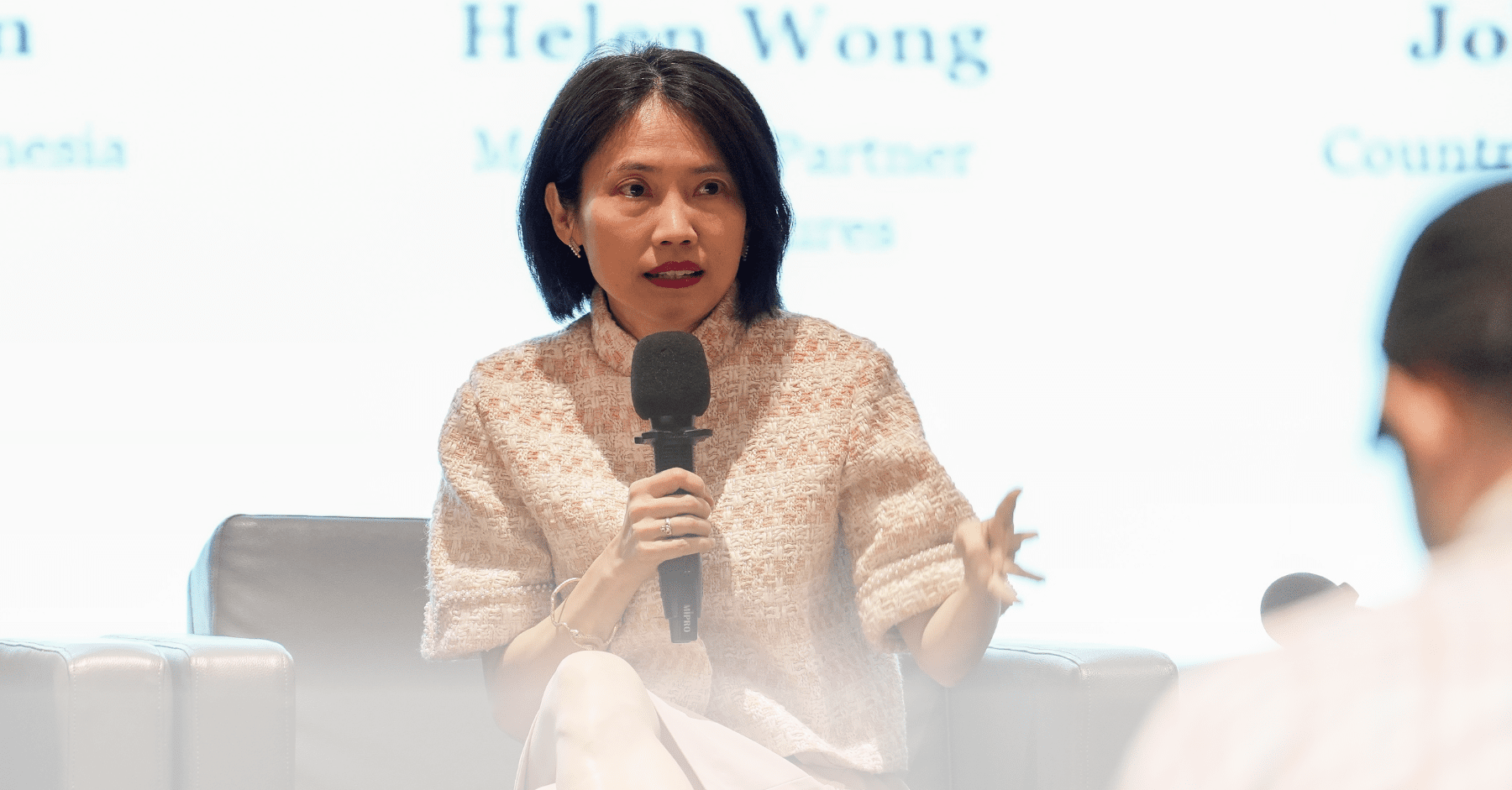
Helen Wong, Managing Partner, ACV Capital
In this op-ed, Helen Wong of ACV Capital, reflects on how 2025 reset Southeast Asia’s capital markets and what the year’s developments signal for investors heading into 2026.
After two years of volatility, 2025 marked a reset for Southeast Asia’s technology and investment markets. Falling interest rates, a weaker dollar, and the reopening of IPO markets in Hong Kong and India helped stabilise sentiment across the region. While conditions have not fully recovered, the year brought clearer signals on where capital is flowing, how risks are being assessed, and which businesses are better positioned for the next phase of growth.
AI investment remains dominant but highly concentrated
AI-dominated global investing in 2025, capturing roughly half of total funding. Investment activity was highly concentrated, with around ten companies raising nearly 80% of total AI funding, much of it through rounds exceeding US$500 million. This concentration underscored the growing advantage of large-scale players operating across models and applications.
In China, the emergence of DeepSeek drew attention to the country’s ability to innovate despite restrictions on access to advanced GPU chips. While Chinese companies demonstrated technical capability, particularly through open source models, concerns persisted that the US continues to absorb a disproportionate share of global AI capital. This concentration raises competitive risks for smaller players seeking to compete with model-to-application platforms such as OpenAI and Anthropic.
In Southeast Asia, interest in AI-related opportunities remained high, but translating that interest into investable outcomes proved difficult. Leading founders continued to gravitate toward the US market, while valuations often moved ahead of revenue growth, keeping investment activity selective.
Governance standards face renewed scrutiny
Early in the year, the eFishery scandal unsettled the Indonesian venture ecosystem and prompted questions from limited partners about governance practices. While such incidents are not unique to Southeast Asia, similar cases elsewhere, including in China, highlight the additional diligence required in emerging markets.
Founders may not always be familiar with venture-backed governance expectations and may make short-term decisions that create longer-term risks. This places greater importance on reference checks beyond founder-provided contacts, robust whistleblower mechanisms, and on-site verification. Avoiding management teams with unresolved reputational risks remains a baseline requirement. In private markets, credibility is difficult to rebuild once lost. A simple principle still applies: when something appears too good to be true, it often is.
Trade tensions and Southeast Asia’s strategic positioning
The announcement of new US tariffs initially triggered market anxiety, but the region adjusted more quickly than expected. Most Southeast Asian economies adapted to a new baseline of roughly 20% tariffs, even as supply chain reconfiguration continued and uncertainty gradually eased.
Indonesia’s decision to join BRICS in January, followed by progress toward a Comprehensive Economic Partnership Agreement with Europe in September, reflected a pragmatic diversification of alliances. At the same time, “China plus one” manufacturing strategies continued to favour Southeast Asia, while India appeared to face greater tariff-related pressure.
IPO reopenings and the return of exit visibility
The reopening of IPO markets in 2025 marked a turning point for Asia’s private capital ecosystem. After several muted years, public markets, led by Hong Kong, re-emerged as credible exit venues, restoring liquidity and valuation benchmarks for venture and growth investors.
In Southeast Asia, local listings also regained relevance. The IPO of Fore on the Indonesian Stock Exchange highlighted the growing depth of domestic capital markets and reduced reliance on overseas exits. In parallel, Hong Kong’s revival, particularly in consumer listings, stood in contrast to the more uncertain environment facing Asian companies in US markets, reinforcing its role as a bridge between global capital and Asian growth companies.
As IPO activity resumes, the bar for public listings has risen. Markets are increasingly rewarding scale, profitability, and strong governance, prompting founders and investors to prepare earlier and operate with greater discipline. Regional exchanges are therefore likely to play a larger role as primary exit venues for Southeast Asian companies.
Financial platforms, retail Investors, and market depth
Beyond IPOs, rising retail investor participation across Asia supported stronger trading volumes and market liquidity in 2025. In Indonesia, growing domestic participation strengthened confidence in local markets and highlighted the importance of digital brokerages and capital market infrastructure in broadening access to investing. Stockbit, a leading online brokerage, performed strongly alongside robust domestic trading activity and a surge in retail investors to more than 19 million.
Similar trends emerged elsewhere. In India, digital brokerages benefited from buoyant retail demand. Together, these dynamics helped push the Jakarta Composite Index to record highs by year end. As participation broadens, local capital markets are becoming deeper and less reliant on external flows.
Climate reality, capital constraints, and adaptation
Climate risks intensified across Southeast Asia in 2025, with super typhoons in the Philippines and severe flooding in Indonesia and Thailand. In Indonesia, floods disrupted agricultural supply chains across coffee, palm oil, and pulp and paper.
Despite this, climate tech investment remained relatively limited, accounting for about 16% of total funding by deal value in the first half of 2025, according to DealStreetAsia. Global momentum softened amid policy delays, reduced funding from development finance institutions, and shifting priorities in the US.
Within the region, energy security moved higher on the agenda as data centres drove rising demand for power and water. In electric mobility, Indonesia’s removal of subsidies for two-wheeler EVs created near-term headwinds, though adoption continued to build. Chinese EV brands led by BYD gained further market share, while Vietnam’s VinFast committed US$1 billion to expand manufacturing in Indonesia. Capital is increasingly flowing toward practical solutions that improve resilience, efficiency, and energy security.
Stabilisation and the shift toward growth equity
The defining theme of 2025 for Southeast Asia’s startup ecosystem has been stabilization. Across our portfolio, companies improved financial performance—either through topline growth, cost reductions, or both—with some reaching profitability or becoming cash-flow positive. Our quick-commerce investment, Astro, raised over US$50 million in a round led by Amazon, reflecting sustained consumer demand for fast online delivery.
At ACV Capital, we increased our focus on growth equity, where we see compelling opportunities in profitable, cash-generative businesses. This shift reflects a maturing tech ecosystem, even as long-term drivers such as urbanization and consumer growth remain intact.
Looking ahead
Despite tariffs, climate disruptions, and geopolitical uncertainty, Southeast Asian economies showed notable resilience, with GDP growth of around 4.5% and inflation close to 2%. The year brought greater clarity around governance standards, exit pathways, and capital discipline.
As markets move into 2026, the question is less about whether opportunity exists and more about which investors and founders are prepared to pursue it with patience, rigour, and conviction after a year of reset.