

From Southeast Asia to Latin America: How Xendit’s Tessa Wijaya builds global payments infrastructure
Published on March 12, 2026
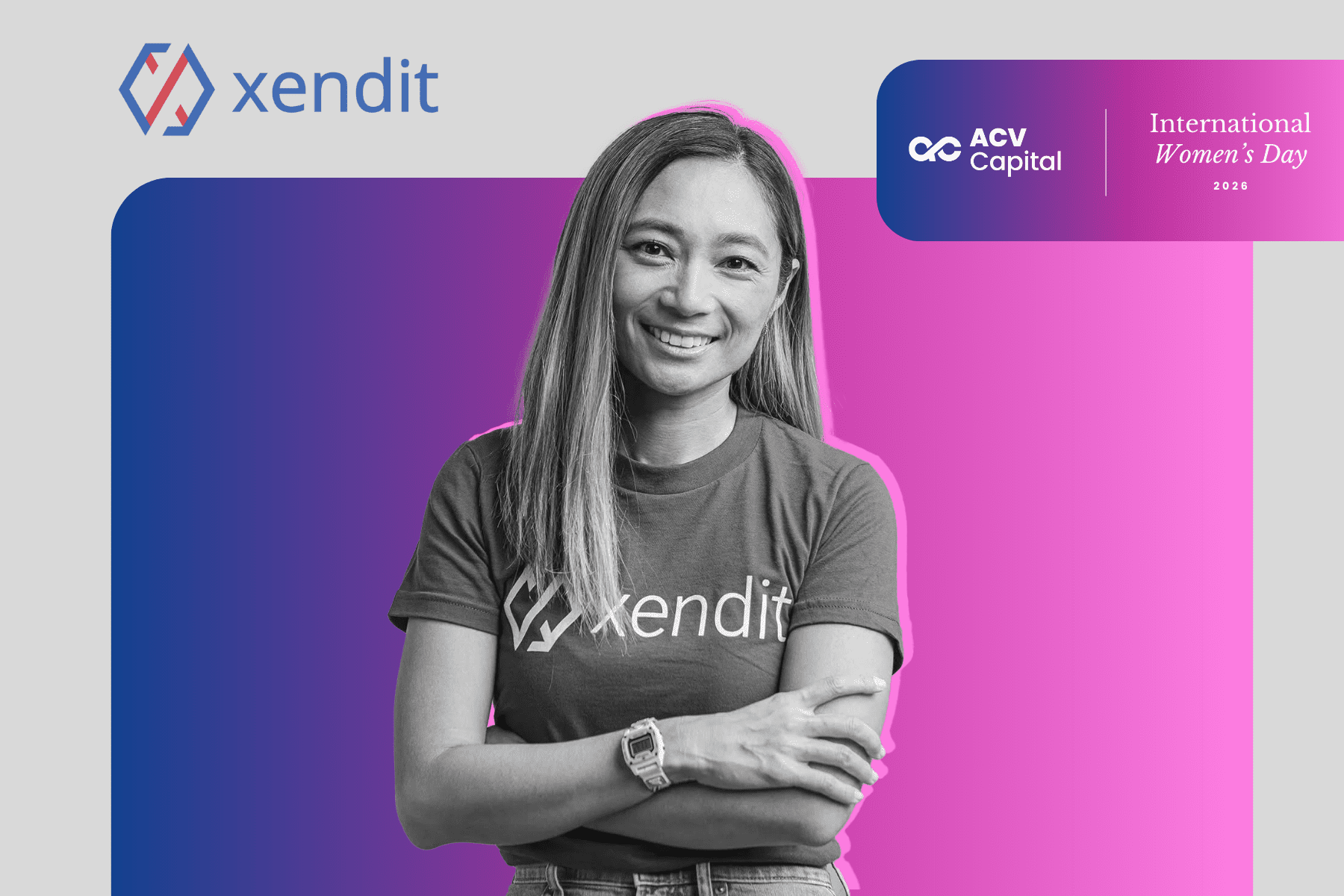
Tessa Wijaya, Co-Founder & COO, Xendit
When Tessa Wijaya left investment banking to co-found a payments startup in 2015, Southeast Asia’s digital economy was still in its early stages. E-commerce was expanding rapidly, but payments infrastructure across the region remained fragmented and complex.
The decision required a significant leap. Tessa left a stable career in finance and accepted a substantial pay cut to help build a company focused on simplifying digital payments for businesses across Southeast Asia. Together with her co-founders, she set out to build a platform that could simplify how businesses accept and send payments across the region.
A decade later, Xendit has grown into one of the region’s most important financial infrastructure providers.
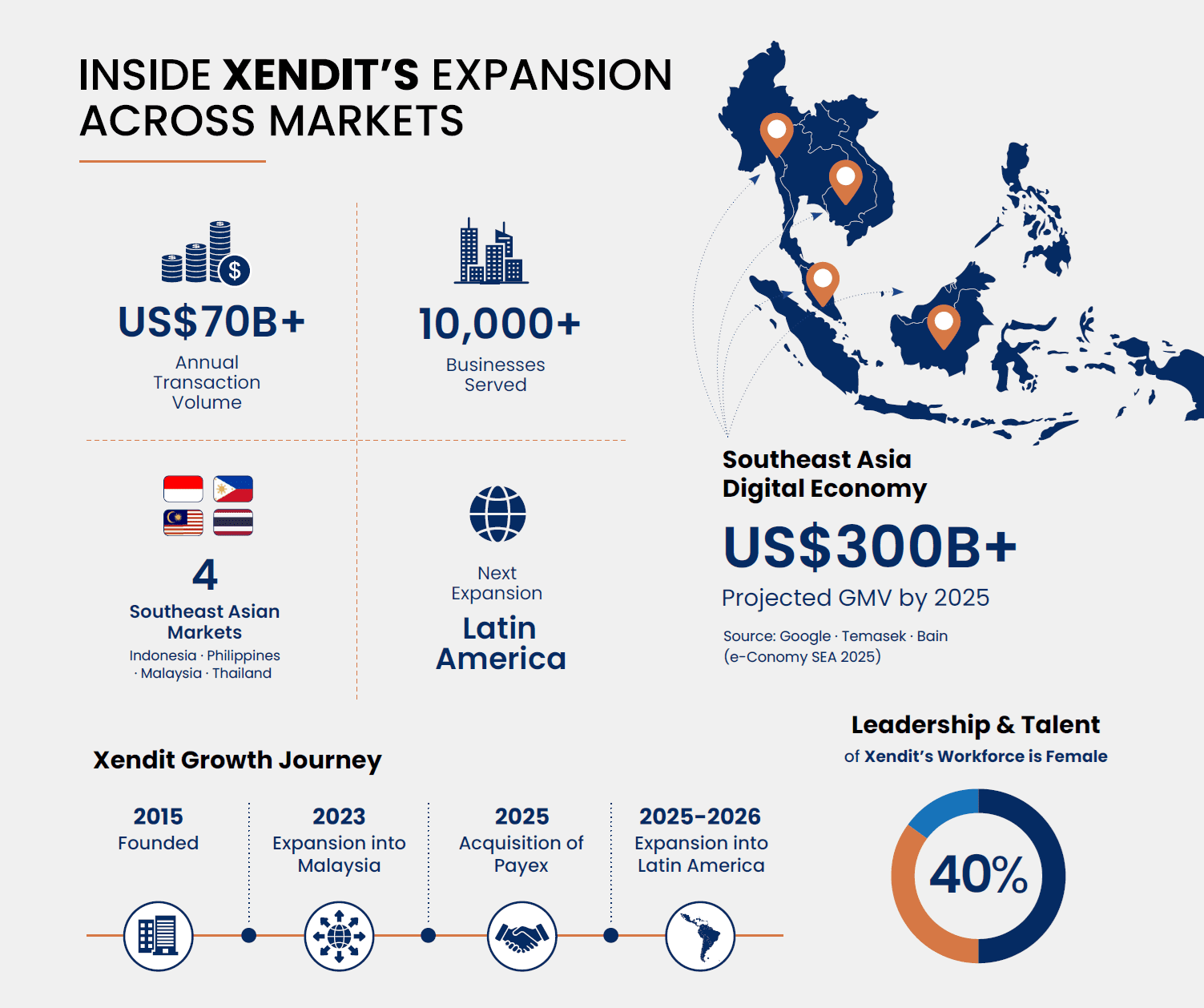
Backed early by ACV Capital, the Indonesia-born fintech now processes more than US$70 billion in transactions annually, serving over 10,000 businesses across Indonesia, the Philippines, Malaysia, and Thailand. Its clients range from global technology companies such as Meta and Samsung to regional platforms including TikTok and Shopee.
The scale of the business has earned Xendit a reputation as the “Stripe of Southeast Asia,” reflecting its role in powering digital commerce across the region.
Building infrastructure for a fragmented region
Southeast Asia’s financial systems are defined by fragmentation. Payment methods vary widely across markets, from bank transfers and e-wallets to local cards and cash-based systems. For businesses expanding across borders, integrating these systems can quickly become operationally complex.
Xendit’s approach has been to build a unified infrastructure layer that allows companies to manage payments through a single API. The platform enables businesses to accept and disburse funds across multiple countries, currencies, and payment methods without building separate integrations in each market.
This infrastructure model has become increasingly valuable as Southeast Asia’s digital economy expands. The Google, Temasek, and Bain e-Conomy SEA 2025 report projects the region’s internet economy will surpass US$300 billion in gross merchandise value by 2025, driving demand for digital financial services and the payments infrastructure that supports them.
As Chief Operating Officer, Tessa has played a central role in shaping how the company scales operationally across markets. Her background in investment and financial services helped Xendit build partnerships with banks, regulators, and businesses navigating the region’s evolving financial landscape.
Scaling regionally through strategic expansion
As Xendit expanded across Southeast Asia, the company also began strengthening its regional footprint through targeted acquisitions.
In October 2025, Xendit completed the acquisition of Payex, a Bank Negara Malaysia–licensed payment gateway. The deal marked a key step in strengthening the company’s Malaysian operations and deepening its presence in one of Southeast Asia’s fastest-growing digital economies.
Following the acquisition, Payex was rebranded as Xendit Malaysia, operating under its local regulatory license while integrating with the company’s regional technology stack. Since entering Malaysia in 2023, the platform has onboarded more than 4,500 businesses and processed US$1.1 billion in payment volume.
The strategy reflects a broader pattern in Xendit’s expansion. By combining local regulatory capabilities with a unified technology platform, the company enables businesses to operate more seamlessly across Southeast Asia’s diverse markets.
Taking the emerging market playbook global
After building scale across Southeast Asia, Xendit is now applying its model to other emerging markets.
In late 2025, the company announced plans to expand into Latin America, beginning with Mexico and Colombia, followed by Chile, Argentina, and Brazil in 2026.
The expansion reflects a belief that many of the structural challenges that once defined Southeast Asia’s payments landscape also exist in other emerging markets. Fragmented financial systems, differing regulatory environments, and uneven financial access continue to create operational hurdles for businesses expanding across borders.
For Xendit, the opportunity lies in applying lessons learned from Southeast Asia to other fast-growing digital economies.
As global commerce becomes increasingly cross-border, infrastructure that simplifies payments across jurisdictions and currencies is becoming a core requirement for businesses operating internationally.
Leadership shaping the next phase of fintech
Beyond the company’s expansion, Tessa has also played a role in shaping how fintech companies build teams and leadership structures.
In her role as Chief Operating Officer, she oversees much of the company’s operational backbone, from onboarding and integrations to customer success, financial operations, and compliance. As the company expanded from a small founding team into a regional fintech infrastructure platform, building the systems and teams capable of supporting that growth became one of her central responsibilities.
Under her leadership, around 40% of Xendit’s workforce is female, a notable figure in the global fintech sector. She has also supported initiatives that connect women working in technology and finance, helping expand networks and mentorship opportunities within the industry.
Tessa has been widely recognised for her leadership in the region’s fintech ecosystem. She has been featured on FintechNews Singapore’s Top Women in Fintech in Asia 2026 list, Forbes Asia’s Power Businesswomen ranking, and J.P. Morgan’s Top 100 Asia-Pacific Women-Powered Businesses list in 2021.
Across Asia’s financial ecosystem, more women are stepping into roles that shape how capital, technology, and financial access evolve. They are leading digital banks, scaling payments infrastructure, and building the systems that enable millions of people and businesses to participate in the digital economy.
Tessa’s journey reflects that shift. From taking a leap into fintech to helping scale Xendit into one of Southeast Asia’s leading payments infrastructure platforms, her leadership reflects the growing role women founders play in shaping the region’s technology ecosystem.