
Southeast Asia’s quick commerce market reaches US$7.3 billion as the sector enters a new stage of growth
Published on June 29, 2026
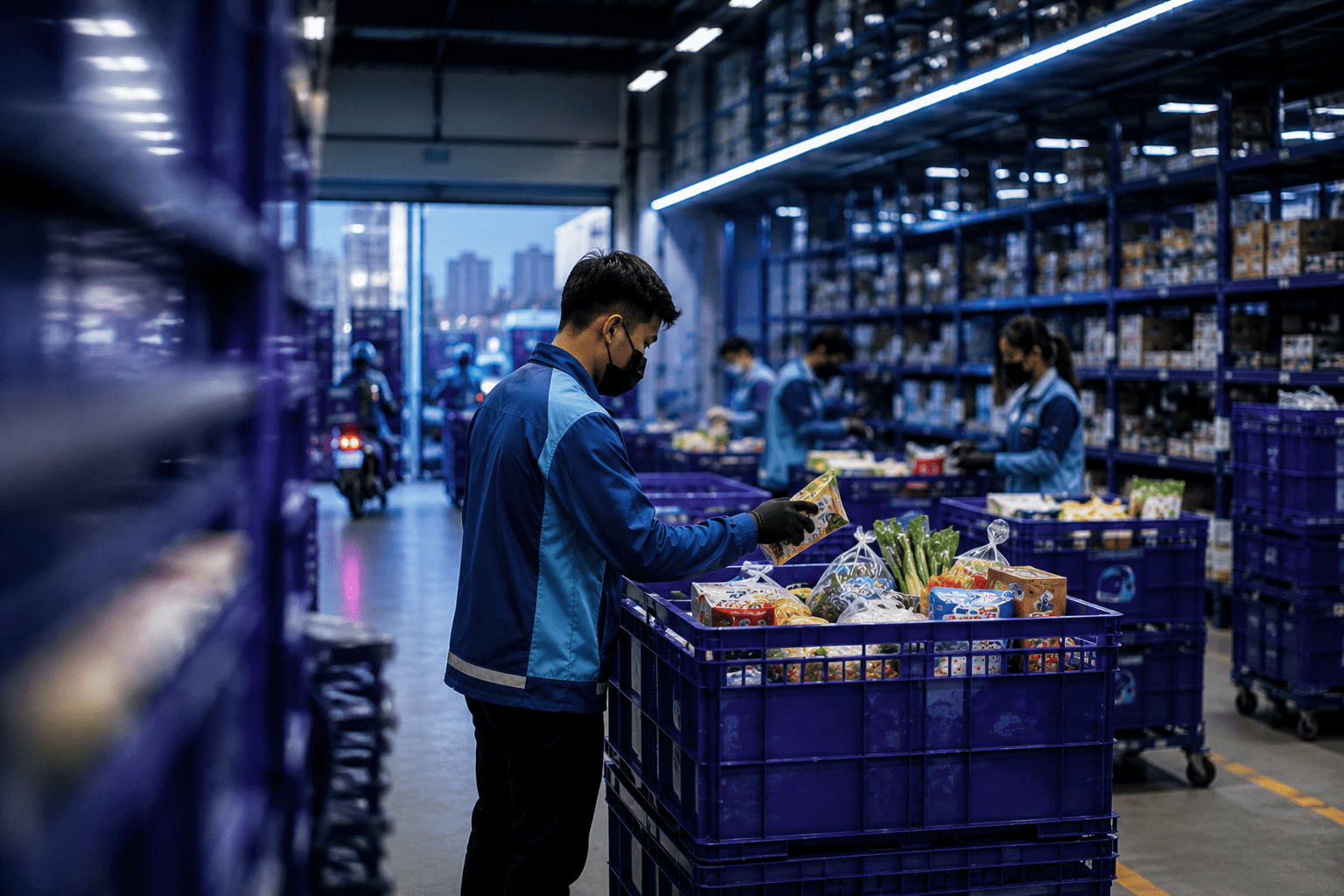
Illustration of a quick commerce fulfillment centre supporting online grocery operations
As Southeast Asia’s quick commerce market evolves beyond rapid expansion, attention is increasingly shifting toward the operating models shaping the sector’s next phase of growth. Astro offers one example of how that evolution is taking shape in Indonesia.
Momentum Works’ latest research found that Southeast Asia’s quick commerce market generated US$7.3 billion in gross merchandise value (GMV) in 2025, equivalent to approximately 4.6% of the region’s e-commerce market. Yet despite its rapid growth, the category still accounts for less than 1% of total retail sales across Southeast Asia.
The figures suggest that quick commerce has moved beyond proving consumer demand while remaining in the early stages of adoption. Increasingly, the next phase of growth will be shaped by the strength of operators’ operating models.
Indonesia’s opportunity remains early
Southeast Asia is often viewed as a single digital economy, but quick commerce is developing differently across each market.
Unlike China, where dense urban infrastructure accelerated adoption, or India, where organised retail followed a different trajectory, Indonesia combines one of the region’s largest consumer markets with relatively low online grocery penetration. Momentum Works estimates online grocery penetration across Southeast Asia stands at approximately 4.2%, while previous industry estimates suggest Indonesia remains below that level despite having the region’s largest population and one of its fastest-growing digital commerce markets.
Momentum Works also expects Indonesia’s quick commerce market to evolve differently from several neighbouring countries, with e-commerce platforms expected to play a larger role than traditional convenience store chains.
Indonesia’s opportunity extends beyond the size of its consumer market. Relatively low online grocery penetration leaves considerable room for quick commerce adoption to deepen as more households incorporate digital channels into their everyday grocery shopping.
Grocery underpins quick commerce economics
Quick commerce is often associated with delivery speed, but grocery remains the category that underpins the economics of the business.
Unlike fashion or consumer electronics, grocery purchases are recurring. Households replenish fresh food, beverages, and everyday essentials every week, creating a predictable cycle of demand rather than occasional transactions.
As purchasing frequency increases, fulfillment centres process more orders, inventory moves more efficiently, and delivery routes become denser. Existing infrastructure becomes more productive without requiring the same pace of network expansion. Over time, competitive advantage is defined not only by the scale of the network but by how effectively that infrastructure is utilised.
This is one reason grocery continues to anchor Southeast Asia’s quick commerce market, even as operators broaden their assortment into categories such as personal care and household products.
Building for the next stage of quick commerce
Astro, one of Indonesia’s leading quick commerce platforms, illustrates how operators are adapting as the market evolves.
Founded in 2021, Astro operates a network of dark stores and micro fulfillment centres serving consumers across major urban areas in Indonesia. By managing inventory within its own fulfillment network, the company maintains greater control over product availability and fulfillment while supporting a consistent customer experience.
The company has also expanded its private label portfolio alongside branded products, strengthening assortment differentiation while supporting healthier category economics. Localized fulfillment infrastructure, inventory ownership, and private label position the business around recurring household demand rather than one-time purchases.
Astro’s progress has also attracted continued investor interest. In 2025, Amazon reportedly led a funding round of more than US$50 million, joining existing investors including ACV Capital. The investment reflected continued confidence in the company’s operating model as Indonesia’s quick commerce market continued to evolve.
The next phase of competition
As quick commerce matures, the basis of competition is likely to broaden beyond delivery speed. The ability to improve inventory productivity, increase fulfillment utilisation, and encourage recurring purchasing behaviour may become increasingly important to how operators scale over time.
Operators with stronger operating models are likely to be better positioned as online grocery adoption continues to deepen. Astro illustrates how stronger operating models are beginning to shape the next phase of Indonesia’s quick commerce market.