
Female leadership and the quality of growth: Lessons from Astro
Published on March 24, 2026
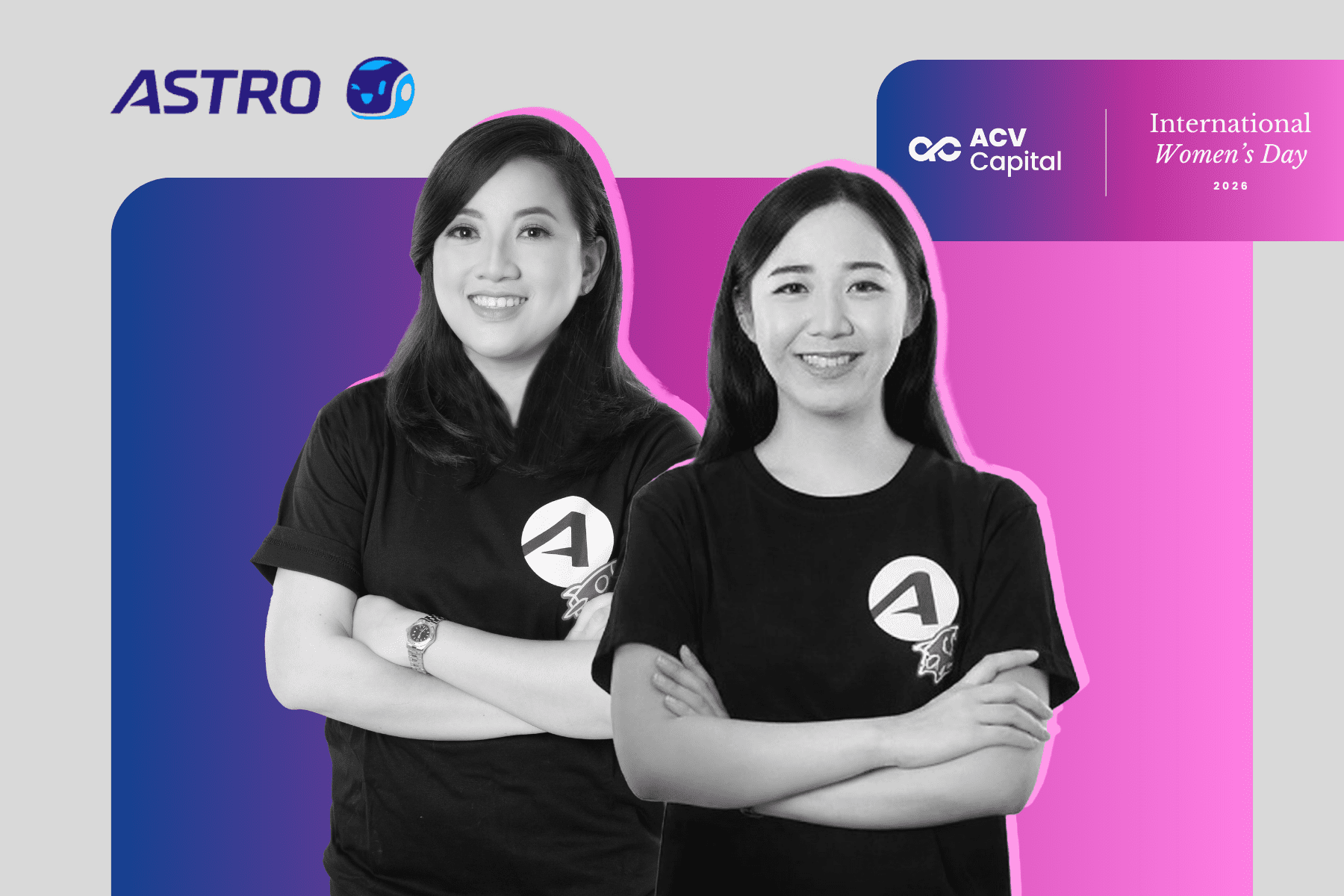
(L–R) Jessica Stephanie Jap, Co-Founder & Chief Operating Officer, and Marcella Moniaga, Co-Founder & Chief Commercial Officer, Astro
In Southeast Asia’s technology sector, the conversation around growth has shifted.
After years of rapid expansion, investors are placing greater emphasis on unit economics, operational discipline, and long-term sustainability. Growth is no longer defined by speed alone, but by how it is built and whether it can endure.
Alongside this shift, female leadership is coming into sharper focus. Across markets, companies with gender-balanced leadership teams are often associated with stronger capital efficiency, more disciplined execution, and more resilient business models. The implication is less about representation and more about how leadership perspective shapes outcomes.
Astro, Indonesia’s leading quick commerce platform, offers a useful case in point.
Translating customer understanding into execution
Founded in 2021, Astro operates a network of dark stores and micro-fulfillment centers to enable rapid grocery delivery across Jakarta. The model sits within a market that remains structurally underpenetrated. E-grocery adoption in Indonesia is estimated at around 3%, with projections suggesting it could reach 10% by 2030. Even under conservative assumptions focused on dense urban areas, this represents a US$20–30 billion addressable opportunity.
Capturing that opportunity requires more than infrastructure. It requires an understanding of how customers actually behave.
At Astro, female leadership plays a meaningful role in shaping how customer insight is translated into execution.
For co-founders Jessica Stephanie Jap (Chief Operating Officer) and Marcella Moniaga (Chief Commercial Officer), that understanding is grounded in firsthand experience. As female founders navigating both the demands of building a company and the realities of everyday life, they bring a perspective shaped by how time, reliability, and consistency influence daily decisions.
As Jessica has noted, balancing professional ambition with family responsibilities is a common challenge for many women. Building within those constraints has informed how Astro prioritises reliability, efficiency, and everyday utility in its product and operations, resulting in a more retention-driven approach to growth.
Rather than relying on discount-led strategies that defined earlier phases of Southeast Asia’s e-commerce development, Astro has focused on consistency. Reliable delivery times, curated assortments, and operational control across its supply chain have become central to its approach.
The result is a model designed not just to acquire users, but to retain them.
From growth to quality of growth
Astro’s approach reflects a broader shift in how investors assess technology businesses.
Where earlier cycles prioritised expansion, the current environment places greater weight on efficiency. The focus is on how capital is deployed, how quickly businesses move toward profitability, and how sustainably they can scale.
Leadership perspective, including that shaped by female leadership, plays a direct role in how growth is built and sustained.
At Astro, this is reflected in an integrated and scalable operating model. Investments in logistics infrastructure improve delivery speed and reliability, strengthening the customer experience. Higher engagement drives order density, which improves cost efficiency and supplier relationships. Over time, these dynamics support stronger margins and more predictable growth.
The company’s expansion into private label products further strengthens its economics, improving margins while reinforcing customer trust.
This focus on operational fundamentals has positioned Astro within a more disciplined growth environment. In 2025, the company attracted continued investor interest, with Amazon reportedly leading a US$51.9 million funding round alongside existing investors.
How leadership shapes scalable execution
While operating models and market timing matter, leadership ultimately shapes how those strategies are executed.
At Astro, leadership is closely tied to clarity, discipline, and the ability to develop people alongside the business.
“As a leader, your job doesn’t stop at making decisions. It lives in how you guide, support, and grow the people around you,” said Marcella Moniaga. “When people understand what they are working on and why it matters, their work naturally aligns with higher expectations.”
That clarity becomes particularly important in high-growth environments, where teams are required to operate with both speed and precision.
At the same time, maintaining high standards remains central to how the company is built.
“Standards should never be lowered. The bar stays high. The real work is making sure the team has the capacity to grow into it,” she added.
This balance between discipline and support often differentiates companies that scale effectively from those that struggle under the weight of growth.
From an investor perspective, this also reflects a broader pattern.
“At the fund level, we see gender inclusion as something that should be embedded not only in what we invest in, but in how investment decisions are made,” said Helen Wong, Managing Partner, ACV Capital. “Different perspectives influence how opportunities are evaluated, how risks are assessed, and how companies are supported as they grow.”
Research by the International Finance Corporation indicates fund managers with gender-balanced leadership teams can achieve up to 20% higher returns, while companies with diverse leadership command higher valuations.
Rather than a standalone factor, leadership diversity is part of a wider system shaping how businesses are built, operated, and scaled.
Defining the next phase of growth
As Southeast Asia’s technology ecosystem evolves, the distinction between growth and the quality of growth is becoming more pronounced.
Companies that combine market insight with operational discipline are better positioned to navigate changing capital environments and shifting consumer expectations. Leadership plays a central role in this process, not as a headline, but as part of how decisions are made every day.
Astro’s development illustrates how these elements can come together, particularly how female leadership can shape the quality of growth.
In a market where speed once defined success, the next phase of growth is likely to be shaped by a different set of priorities. Efficiency, resilience, and the ability to build for the long term are becoming the defining characteristics of companies that endure.