

A founder’s lens on Southeast Asia’s evolving parent economy
Published on April 7, 2026
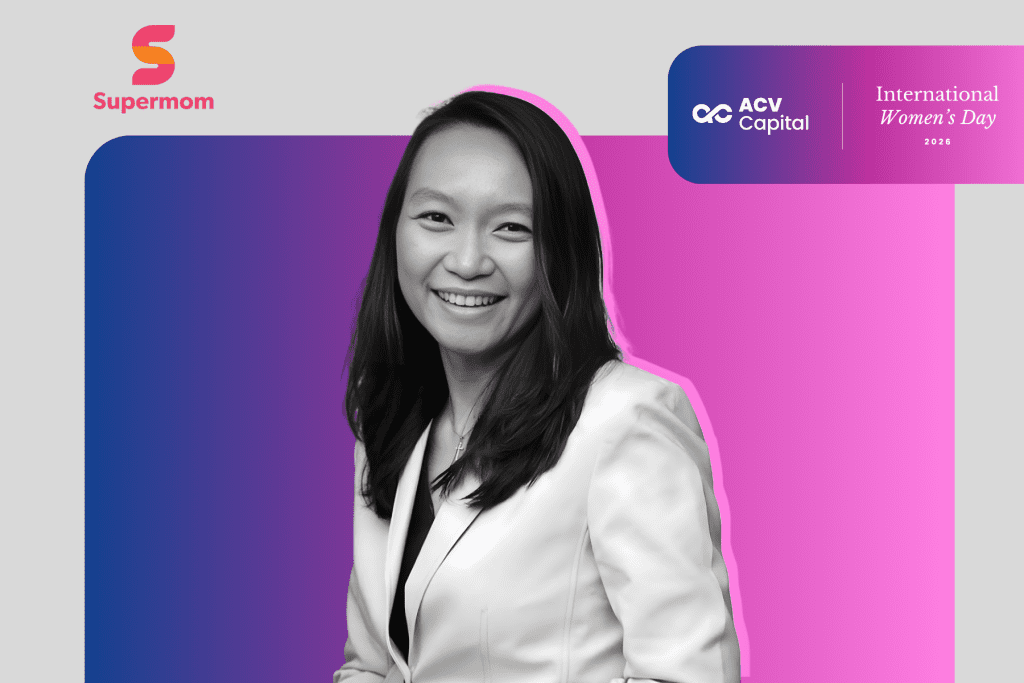
Rebecca Koh, Co-Founder and Chief of Business & People, Supermom
Supermom is building what most consumer platforms in Southeast Asia struggle to achieve: the ability to translate consumer insight directly into revenue.
Named to the Forbes Asia 100 to Watch list in 2025, the company, co-founded by Joan Ong, Luke Lim, and Rebecca Koh, has grown into one of the region’s largest parenting platforms, reaching millions of mothers across the region. But scale alone is not what differentiates it.
What stands out is how that audience is structured—and monetised.
At its core, Supermom operates at the intersection of three layers that are often fragmented across the marketing ecosystem: consumer insight, community, and activation. Most platforms do one well. Few integrate all three into a single model.
That integration is what allows the business to convert understanding into measurable outcomes.
From data to revenue, not just insight
Traditional consumer research captures what people say. Supermom captures how decisions are actually made and links that directly to brand execution.
With a large base of profiled parents, the platform generates first-party data that reflects real-time needs, preferences, and trade-offs across households. Unlike research firms, the value does not stop at insight.
Brands can act on that data immediately, whether through targeted campaigns, product testing, or community-led activation via Supermom’s network of Key Opinion Moms (KOMs).
This creates a closed loop:
insight → engagement → conversion → feedback
For brands, it reduces guesswork. For Supermom, it creates multiple monetisation layers—from survey-based insights and database subscriptions to take rates on campaign execution.
Why parents matter in today’s consumer economy
The focus on parents, particularly mothers, is deliberate.
Across Southeast Asia, they remain central to household decision-making, influencing spending across multiple categories, including FMCG, healthcare, education, and financial services.
More importantly, their behavior is changing. As living costs rise, parents are no longer making isolated purchase decisions. They are allocating across priorities, which is reshaping how value is defined. Instead of focusing only on price or brand, decisions are increasingly based on how effectively a product serves multiple needs.
As Rebecca Koh, Co-Founder and Chief of Business & People at Supermom, notes “Mothers are not simply selecting the lowest-priced option, but evaluating which products deliver the greatest value across household needs.”
This dynamic creates a more demanding consumer, but also a more valuable one. For platforms that can understand and influence these decisions, the opportunity extends beyond individual categories into a broader share of household spending.
Community as a core layer of the operating model
Where Supermom diverges from traditional marketing platforms is in how it treats community. In most models, the community functions as a channel for distribution or amplification. In Supermom’s model, it is embedded within the operating layer.
Mothers rely heavily on peer validation, including reviews, conversations, and shared experiences, when making decisions. These interactions often carry more weight than brand messaging itself.
By embedding itself within these communities, Supermom captures not only attention, but trust.
That trust translates into higher engagement and more effective conversion for brands. It also increases switching costs, as a platform embedded within decision-making processes is more difficult to displace than one positioned only at the top of the funnel.
Monetising a fragmented market
Supermom operates within an estimated US$3 billion addressable market across Southeast Asia, spanning consumer research and influencer-led marketing.
Today, this market remains fragmented across research firms, agencies, influencer networks, and data providers. Supermom’s model consolidates these functions within a single platform.
- Crowd intelligence surveys generate insight and recurring revenue
- Database subscriptions provide ongoing access to targeted audiences
- Campaign execution captures value at the point of conversion
This multi-layered model allows the company to monetise both the understanding of demand and the activation of demand.
As e-commerce continues to grow, and brands allocate more budget toward performance-driven marketing, platforms that can tie spend directly to outcomes are likely to capture a larger share of that value.
Execution, not narrative
What differentiates Supermom is not the narrative around community or data, both of which are widely discussed, but the execution of integrating them into a single operating model.
This reflects a broader pattern across high-performing companies in Southeast Asia. Leadership teams with direct proximity to their customers often build more efficient and scalable businesses.
In Supermom’s case, that proximity is shaped by founders who understand the segment not as an abstract market, but as a lived experience.
This is reflected in how the platform is designed, how data is interpreted, and how products are brought to market.
Why it matters
In a more disciplined capital environment, growth alone is no longer sufficient. Investors are increasingly focused on how that growth is generated, whether it is repeatable, efficient, and defensible.
Supermom’s model points to one answer. By linking consumer insight directly to execution and embedding itself within high-frequency decision-making communities, the company is building not just reach, but relevance, and converting both into revenue.
In Southeast Asia’s evolving consumer economy, that combination is becoming harder to find, and more valuable when it does.