
ACV Capital hosts Stanford GSB for in-depth dialogue on climate investment in Southeast Asia
Published on March 26, 2025
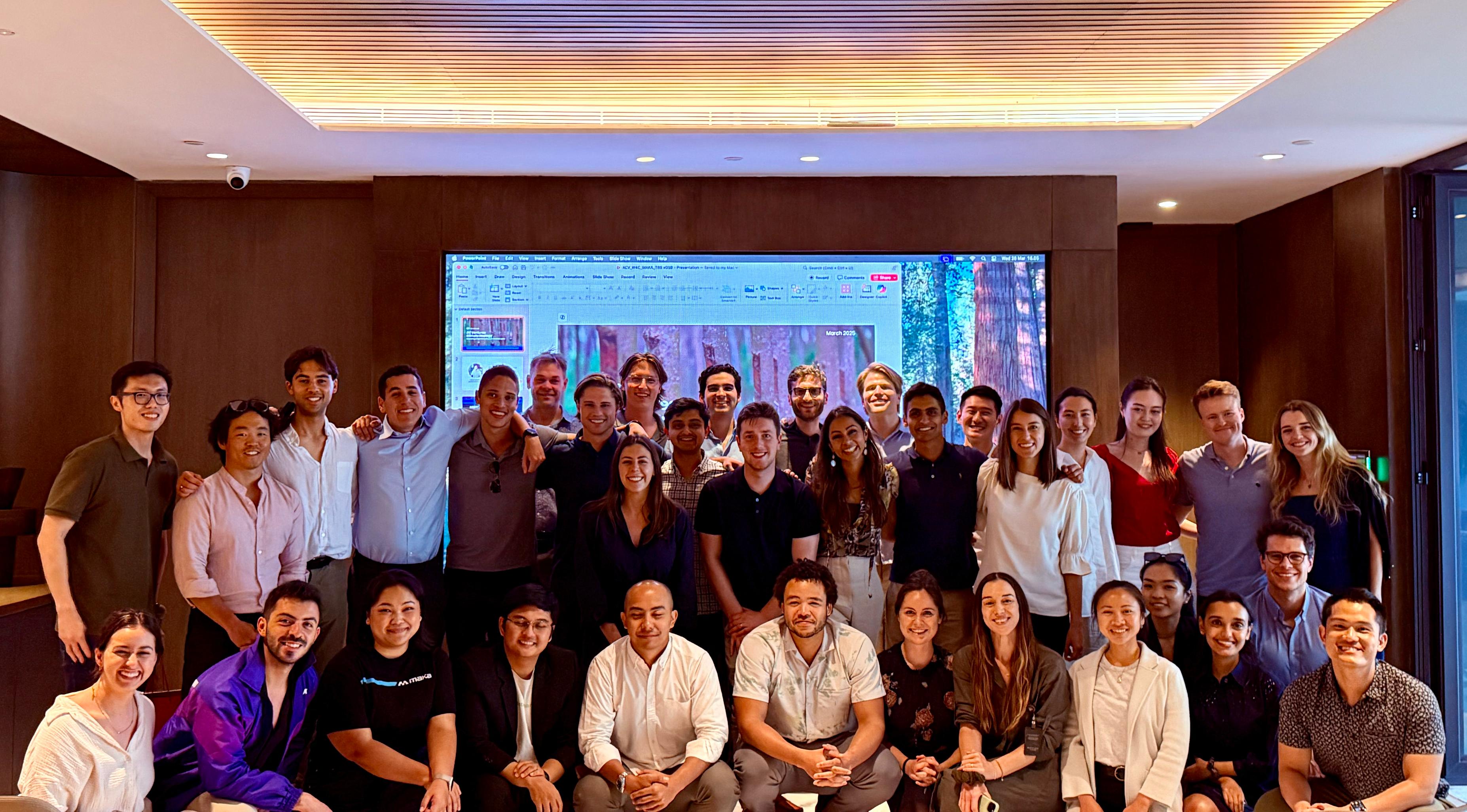
ACV Capital, a leading Southeast Asian venture capital firm, recently welcomed students from the Stanford University Graduate School of Business (GSB) for an in-depth session focused on climate investment opportunities in Southeast Asia. Held at ACV’s headquarters in Jakarta, the event explored the region’s growing role in tackling climate change through innovative and scalable investments.
Larry Susanto, AVP of Investment at ACV Capital, led the discussion by highlighting Southeast Asia’s dual challenge as a major energy consumer and a significant contributor to global emissions. He also shed light on the region’s potential to drive the energy transition, particularly in Indonesia, and presented a compelling case for the US$3 trillion green investment opportunity in Southeast Asia.
With a population of over 650 million and rising energy demands, Southeast Asia is now the world’s fourth-largest energy consumer, with more than 80% of its energy derived from fossil fuels. The region also plays a major role in global emissions, contributing significantly through land use change and deforestation. However, Southeast Asia holds immense potential to accelerate the energy transition—eight out of ten countries in the region have the technical renewable energy capacity to meet their electricity needs, while several are already exporting clean energy.
“Climate change has created enormous social and economic risks,” Larry noted. “Up to five Southeast Asian nations rank among the 25 most climate-vulnerable globally, and GDP losses due to climate events could reach up to 4.3% by 2030.” He added that Indonesia alone has seen an estimated US$350 million in flood-related losses since 2019, and 2,000 of its islands are at risk of submersion by 2050.
Larry also presented ACV’s three-pronged climate investment thesis: mitigating GHG emissions through scalable technology, enabling adaptation through innovation, and building resilience via green infrastructure. “Indonesia and Southeast Asia have a unique opportunity to become leaders in the global energy transition,” he said. “By backing clean energy, waste management, and electric mobility, we aim to generate both strong financial returns and long-lasting environmental impact.”
The session also featured Adhitya Prayoga from Waste4Change, Angela W.T P. from MAKA Motors, and Adriel Simorangkir from PT TBS Energi Utama Tbk, who shared insights into their respective companies’ efforts in waste management, electric mobility, and renewable energy. The panelists discussed their innovative solutions aimed at accelerating Southeast Asia’s transition to a sustainable future.
The session provided Stanford GSB students with real-world insights into how climate innovation is being driven from within the region. Discussions covered a range of topics, including sustainable operations, clean energy scalability, and market-fit strategies tailored for Southeast Asia’s unique challenges.
With Southeast Asia emerging as a critical front in the global climate response, the dialogue reinforced the region’s growing relevance for investors, entrepreneurs, and policymakers seeking impactful and scalable solutions.